
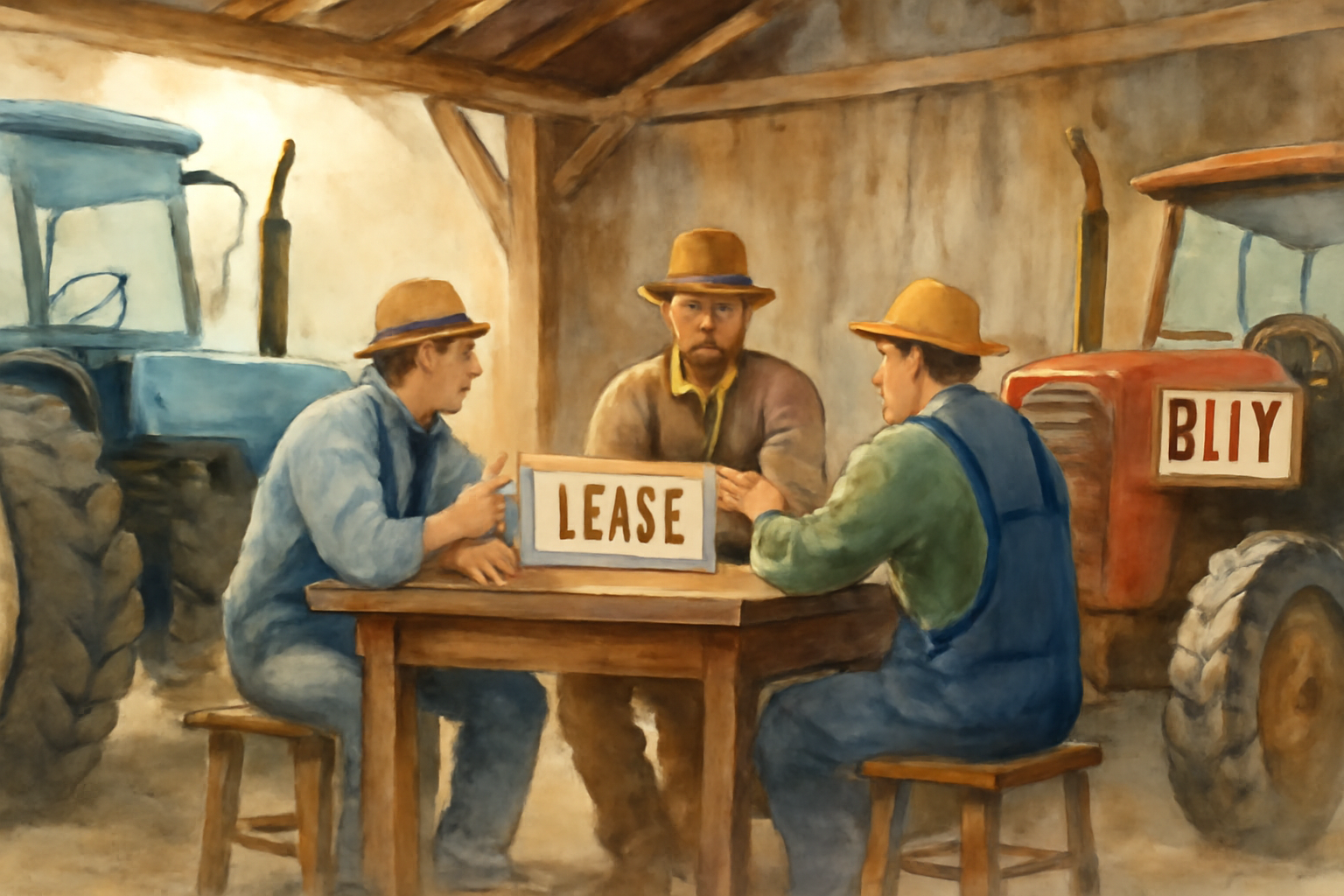
In the context of farm equipment, the decision to lease or buy involves evaluating financial, operational, and strategic aspects. Both leasing and buying have distinct advantages and drawbacks, making the choice highly dependent on the individual circumstances of the farmer and the specific needs of the operation.
Financial Considerations
Capital Outlay: Buying farm equipment typically requires a significant initial investment, as it involves full payment or financing over a period. In contrast, leasing farm equipment usually requires less upfront capital, spreading payments over the lease term, which can preserve cash flow for other operational needs.
Depreciation and Asset Depreciation: When buying, the equipment's depreciation is recorded as an expense, potentially offering tax benefits, depending on the tax jurisdiction. For leased equipment, payments can often be deducted as a business expense.
Long-term Cost: While owning equipment might seem expensive due to the upfront costs, it can be more economical over a longer period if the equipment has a long useful life. Leasing typically involves lower costs short-term but could be more expensive if leased continuously over many years.
Operational Flexibility
Equipment Upgrades and Flexibility: Leasing allows farmers to access the latest technology and upgrade equipment more frequently without the burden of selling old machines. This can be advantageous in sectors with rapid technological advancements.
Usage and Wear: If equipment is used extensively, ownership might be more economical as no penalties for excessive wear and tear apply, unlike many lease agreements where excessive use can result in additional charges.
Strategic Benefits and Limitations
Asset Ownership: Owning equipment adds to the farm's asset base, improving its balance sheet and potentially its ability to secure loans against these assets. Leasing does not provide the equipment as an asset owned by the business, which can impact long-term borrowing capacity.
Risk Management: Leasing can mitigate the risk of equipment obsolescence and market fluctuations. The residual value risk (value of equipment at end of use) lies with the lessor in leasing agreements, whereas buyers assume this risk.
Decision-Making Framework
Farmers should assess their financial health, future cash flow projections, and technology needs before deciding. Leasing might suit younger, smaller operations needing modern technology with minimal capital investment. In contrast, buying may benefit more established, stable operations looking to expand their asset base and leverage it for financial growth.
Finding the perfect balance involves considering not just the immediate financial implications but also the long-term strategic goals of the farming operation.